
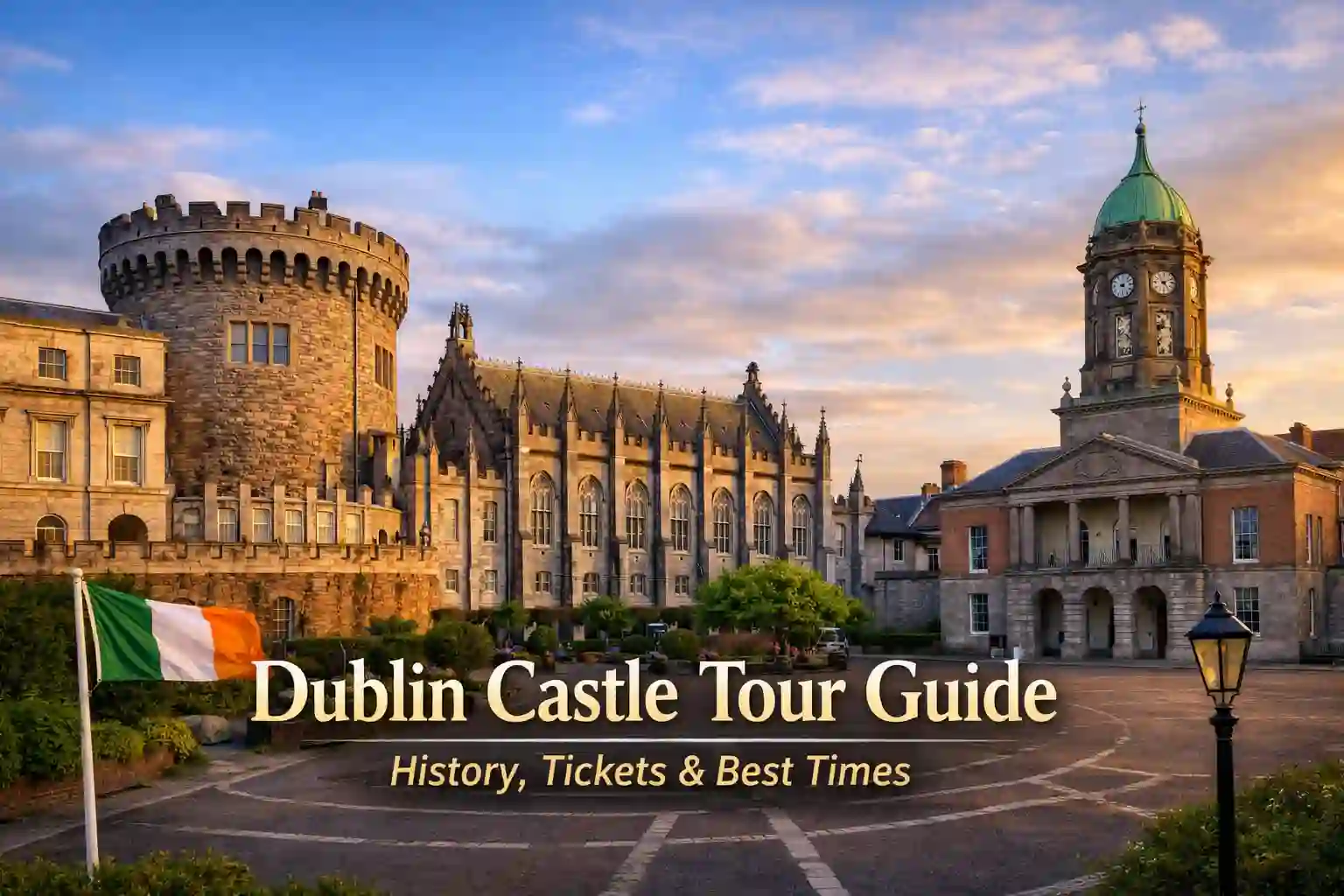
Standing at the heart of Dublin for over 800 years, Dublin Castle represents Ireland’s most significant historical landmark. This magnificent complex served as the seat of British rule until 1922 and now hosts Irish presidential inaugurations, state receptions, and European Union summits.
Whether you’re a history enthusiast exploring Ireland’s past or a first-time visitor discovering Dublin, this guide reveals everything you need to know about touring the castle, understanding its layered history, and planning your visit effectively.
Why Dublin Castle Matters
Dublin Castle occupies a unique position in Irish history, simultaneously representing centuries of British colonial administration and modern Irish independence. Located in Dame Street in Dublin’s city center, the castle complex evolved from a medieval fortress (1204) into an elegant Georgian administrative center.
Historical Significance:
- Founded in 1204 by King John of England on Viking settlement ruins
- Served as Britain’s administrative headquarters in Ireland for 700+ years
- Site of the 1922 handover when Michael Collins accepted Irish Free State control
- Current venue for presidential inaugurations and state banquets
- Houses the Chester Beatty Library, featuring world-class manuscript collections
Architectural Evolution:
The original Norman fortress featured four circular corner towers and defensive walls. Only the Record Tower (1226) survives from this period. Most visible structures date from the 18th century, when architects rebuilt the complex in elegant Georgian and Victorian styles after devastating fires.
For travelers from the USA exploring Dublin’s heritage, the castle provides context for understanding Ireland’s journey from colonization to independence, making it essential preparation before visiting other historical sites.
What to See: Castle Highlights
1. State Apartments
These lavish reception rooms showcase where British viceroys entertained nobility and managed colonial affairs. The Throne Room still contains the throne used by King George V during his 1911 visit, one of the few remaining British thrones in Ireland.
Key Rooms:
- St. Patrick’s Hall: Grand ballroom with painted ceiling depicting Irish-British relations
- Apollo Room: Features stunning Rococo plasterwork
- Throne Room: Original 18th-century throne and ceremonial furnishings
- Picture Gallery: Portraits of British monarchs and Irish leaders
Guided tours reveal hidden details such as secret doors, symbolic artwork, and architectural features that represent political power dynamics.
2. Chapel Royal (Church of the Most Holy Trinity)
This Gothic Revival masterpiece (completed in 1814) features intricate stone carvings of over 90 carved heads representing Irish saints, British monarchs, and biblical figures. Architect Francis Johnston designed the chapel with stunning fan vaulting and decorative plasterwork.
Unique Features:
- Heraldic symbols of Irish provinces carved into stonework
- Original oak galleries and ornate woodwork
- Stained glass windows depicting religious and historical scenes
3. Medieval Undercroft
Below the castle lie archaeological treasures, including excavated Viking and Norman foundations, revealing Dublin’s earliest history. The Powder Tower Undercroft displays remnants of the original 13th-century fortress walls and the city’s ancient defensive moat.
What You’ll Discover:
- Original Viking defensive structures (9th–10th century)
- Norman castle foundations (13th century)
- Medieval moat and city walls
- Archaeological artifacts from excavations
4. Castle Gardens
The Dubh Linn Gardens occupy the site where Vikings moored boats in a “dark pool” (Dubh Linn in Irish)—giving Dublin its name. Serpentine paths, Celtic Revival design, and the Garda Memorial Garden create peaceful retreats from city bustle.
Practical Visitor Information
| Detail | Information |
|---|---|
| Address | Dame Street, Dublin 2, D02 VN44 |
| Opening Hours | Mon–Sun: 9:45 AM – 5:45 PM (last admission 5:15 PM) |
| Admission | Adults €10, Seniors/Students €8, Children (under 12) Free |
| Guided Tours | Every 20–30 minutes (included in admission) |
| Duration | 60–90 minutes for full guided tour |
| Accessibility | Wheelchair accessible (some medieval areas restricted) |
Closure Dates:
The castle occasionally closes for state functions. Check the official Dublin Castle website before visiting to confirm availability.
Photography Policy:
Photography permitted in gardens and courtyards. Interior photography restrictions apply in State Apartments—guides will specify allowed areas.
Best Ways to Visit Dublin Castle
Guided Tours (Recommended)
Official tours depart regularly throughout the day, led by knowledgeable guides who bring history alive with stories about political intrigue, architectural evolution, and Ireland’s path to independence. Tours access restricted areas not available to independent visitors.
Booking: Purchase tickets at the entrance or online during peak season (June–August).
Self-Guided Exploration
Garden areas and courtyards welcome free exploration year-round. The Chester Beatty Library (located within castle grounds) offers free admission to world-renowned collections of manuscripts, rare books, and decorative arts.
Private Dublin City Tours
Comprehensive experiences like this Dublin city private tour combine the castle with Trinity College, St. Patrick’s Cathedral, Georgian squares, and local neighborhoods, providing a cultural context that enriches your castle visit.
Best for: First-time visitors wanting expert guidance and efficient sightseeing.
Planning Your Visit: Expert Tips
Best Time to Visit:
- Weekday mornings (10:00–11:30 AM) offer smallest crowds
- November–March sees significantly fewer tourists than summer months
- Avoid bank holidays when domestic tourism peaks
What to Combine Nearby:
Within 10-minute walk:
- Trinity College and Book of Kells
- Christ Church Cathedral (medieval cathedral, 1030)
- Temple Bar cultural quarter
- National Museum of Ireland – Archaeology
- Grafton Street shopping district
Time Allocation:
Budget 90 minutes for the guided tour, plus 30 minutes for the gardens and gift shop. History enthusiasts should allow 2.5–3 hours, including the Chester Beatty Library.
Insider Knowledge:
The Revenue Museum in the castle complex rarely gets mentioned but offers fascinating exhibits about Irish customs, smuggling, and contraband, with completely free admission.
Dress Code:
No specific requirements, though comfortable walking shoes are recommended for cobblestone courtyards and stairs.
Historical Context: From Fortress to Symbol
Dublin Castle’s transformation mirrors Ireland’s political evolution. Originally built to assert Norman control, it became Britain’s Irish power center, witnessing rebellions, political negotiations, and ultimately Irish independence.
Key Historical Moments:
- 1534 – Silken Thomas’ rebellion against English rule
- 1684 – A major fire destroyed the medieval great hall
- 1798 – Imprisonment of United Irishmen rebels
- 1907 – Irish Crown Jewels stolen (never recovered)
- 1922 – Michael Collins accepted formal handover from British forces
- 1938 – First presidential inauguration (Douglas Hyde)
The State Apartments, where British officials once governed, now host European Council meetings and presidential ceremonies, symbolizing Ireland’s evolution into an independent, modern European nation.
Frequently Asked Questions
How long does a Dublin Castle tour take?
The standard guided tour lasts 60–75 minutes, covering the State Apartments, Chapel Royal, and medieval undercroft. Allow an additional 30–45 minutes for gardens, the Chester Beatty Library, and the gift shop exploration.
Can you visit Dublin Castle without a guided tour?
Limited areas (courtyards, gardens, Chester Beatty Library) are accessible without tickets. However, State Apartments and Chapel Royal require paid admission with guided tours—these contain the castle’s most significant historical and architectural features.
Is Dublin Castle worth visiting?
Absolutely. It provides essential context for understanding Irish history, features stunning architecture, and reveals layers of Dublin’s development from Viking settlement to modern capital. The contrast between colonial grandeur and independence symbolism makes it uniquely compelling.
What is the difference between Dublin Castle and Edinburgh Castle?
Dublin Castle served primarily as an administrative center with elegant state rooms, while Edinburgh Castle functioned as a military fortress with defensive walls. Dublin’s castle showcases political history through architecture; Edinburgh’s emphasizes military heritage and royal Scottish history.
Are there family-friendly activities at Dublin Castle?
Yes. Children under 12 enter free. The medieval undercroft, ancient tower, and garden exploration engage younger visitors. Family-focused guided tours use storytelling to make history accessible. The Chester Beatty Library offers special children’s workshops during school holidays.
Conclusion
Dublin Castle stands as Ireland’s most historically layered attraction—where Viking foundations support Norman towers, Georgian elegance replaced medieval fortifications, and British colonial architecture now serves Irish democracy. Every room tells stories of power, rebellion, transformation, and resilience.
For visitors from the United States and beyond, the castle provides invaluable context before exploring other Irish historical sites. Understanding the political dynamics represented in these state rooms illuminates the significance of monuments throughout Ireland—from rural abbeys to urban memorials.
Whether you’re passionate about architecture, fascinated by political history, or simply seeking to understand modern Ireland’s origins, Dublin Castle delivers insights that guidebooks can only sketch. The hour you invest touring these rooms will enrich every subsequent Irish experience.
Book your guided tour, arrive early to beat crowds, and prepare to see Ireland’s complex past reflected in one remarkable building. Your Dublin Castle visit becomes the foundation for truly understanding the Irish story.


 No products in the cart.